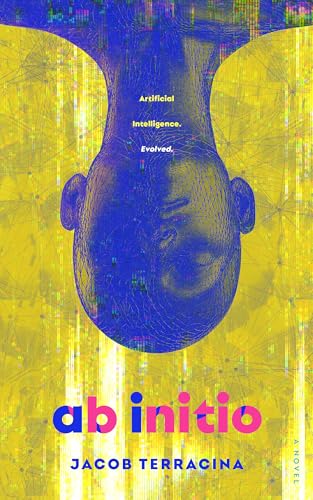
I read this novel for The Self-Published Science Fiction Competition, SPSFC. The following review is my own personal opinion as a judge and does not reflect the views of the team as a whole. Find out more about the competition here and my team, The Space Girls, here, and read all my reviews for the competition here!
Raza Mugabi, a biologist turned software engineer, is not sure why this particular tech startup hired him. His track record is far from stellar. In fact, he’s not certain what the company ultimately even does. Sometimes it’s better to keep your head down and your mouth shut, he figures. At least, until his curiosity gets the better of him.
Eight years later, Raza finds himself as a defendant and key technical witness in a high-profile court case. A world-class prosecutor and a woefully inexperienced defense attorney go head-to-head against each other, their clients, and their consciences in an effort to answer the question on everyone’s mind: is the startup’s invention, legally speaking, human?
The arguments leap between the technical, political, ethical, and philosophical consequences of the decision, and as the trial progresses, the many, many secrets of the startup are laid bare in this hilarious cross-genre thrill-ride.
ab initio (lower case, we’re very into lower case in this book) was interesting for me right off the gate: we start with a courtroom setting and although many of the details, nay, the entire reason we’re there only becomes clear a bit later, the case already sounds like something really critical and, might I say, world-changing. This starting part is heavy on exposition, but it’s all very interesting as we get to know about the (I imagine, part-realistic, large part-fictional) history of simulating chemical reactions and biological processes and how quantum computing might contribute to this, with the final goal of simulating life, intelligence, mayhaps, even human-like intelligence. We are told that for all we can improve on our computing capabilities, such a simulation still seems quite impossible to do, but somehow, a startup tech company says they have managed it. Now they want human rights and protection to their perfect simulation of a human brain, a creature of authentic, unique self, they say. Enter shady disputer who wants to discredit the company, result: courthouse drama. While star prosecutor and defense attorneys (with their own problems and opinions) struggle with each other and various moral dilemmas, we can also follow one of the startup’s software engineers, Raza, in a past timeline, as he joins the company and gets involved with its impossible plans, and in a strange love story with one of its head engineers, Mei.
The book continues on in this fashion. One story thread is the fluctuating process of the trial and the other is Raza’s story starting from getting hired by jinhwa. The trial story introduces us to Jivanta, the strong-willed prosecutor, and the defense, unprepared but loyal Sohvi and her mentor, Vilho, once a hero of his people, now with a declining health. Through the three of them, we get to know the surrounding near-future planet Earth just a little bit more, too. Natural and economical catastrophes loom vaguely in the background, countries flooded with melting arctic ice, the destruction of metropolises, the death of countless members of flora and fauna. Humanity, although with great losses, but seems to be trudging on, somehow, and the brush-strokes never become too solid, but I liked this type of world-building, and it fit the story. On the other side, Raza’s story also gives us something unique: a narrative voice I really enjoyed. The man is riddled with anxieties, is definitely somewhere on the spectrum, and in his inner narration we get a very immersive picture of his personality. I think I liked this aspect of the book the most, the writing really shone brilliantly here, was humorous, witty, chaotic, and occasionally quite painful. Raza contributes significantly to jinhwa’s long, arduous tale of “invention” through his ideas and turning points that we are led towards with a self-assured authorial hand. These turns could have probably been more dramatic, but I appreciated the sometimes subdued sense of them. Just as important to the story was Raza and Mei’s relationship, a budding friendship and attraction that goes through several challenges and was an intriguing part of Raza’s personal development (plus Mei was a really cool character).
I also really appreciated the scientific aspects of the book which were presented confidently and often in a very entertaining way. I wouldn’t have minded to see more of jinhwa’s “creatures” as they evolved, but the mystique and slight horror of The Box added to the tension significantly. There is also a very much intentionally horrific part later on, which sufficiently makes one think about all those moral quandaries we love to muse on when we think about creating artificial life. There are many interesting topics that the lawyers propose and argue for or against, too. And in the end, of course, I don’t spoil much if I say we do get to meet the “invention”, as well.
And I think if I have a bone to pick with ab initio, it is towards this final part. While I loved meeting the “invention” and that scene is pretty satisfying, the ending of the book itself felt abrupt. It does make you think about the fictional future and how that would look like, leaves you with an uneasy feeling and makes you question the final judgement of the court, but everything else, I felt, was a bit interrupted or rushed. I wished for at least one more visit with Raza and Mei, a look at Raza as he is now, after the trial, since we spent so much time with him thus far. Perhaps even a more solid resolution (which does not even have to be a resolution) with Jivanta, Sohvi, and Vilho. And while I do like that last scene, it felt a tiny bit like it was cut in the middle of a dialogue—which, it was, and though I know it was on purpose, it fit my taste less than a slew of other solutions which could have occurred.
In any case, the overwhelming majority of my reading experience was excellent, and ab initio is a very strong finalist with confident writing and style, a cool premise and a satisfying delve into the question of…well, the interesting kind of artificial intelligence. Strongly recommended to lovers of the topic.


Leave a Reply