I read this novella for the indie novella competition, SFINCS. The following review is my own personal opinion as a judge and does not reflect the views of the team as a whole. Find out more about the competition here and my team, The WIPs, here, and read all my reviews for the competition here!
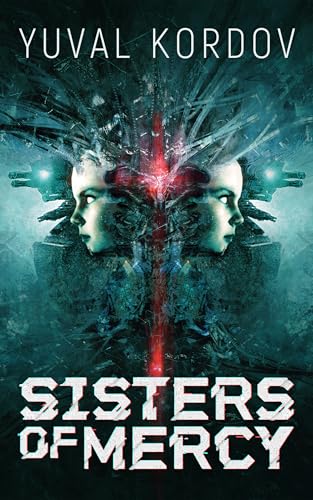
Sisters of Mercy by Yuval Kordov is a grim, post-apocalyptic sci-fi novella about two children implanted into giant war-machines, God-engines, to fight their Adversary in the wastes of what’s left of humanity and civilization, protecting the last bastion of life that exists, the Cathedral. The story is told from the point of view of one of them, Hannah-9, and follows a mission of the two characters to its end. The novella is also connected to the author’s larger series, the Dark Legacies trilogy.
The story starts with Hannah-9’s awakening, or birth, a visceral, confusing, and ominous scene that placed me inside the dark and desperate mood of the novella instantly. We get an incredible description of the world Hannah arrives in, a desolate plain riddled with decrepit ruins of ancient cities, and Hannah, and her Sister, Rachel-3 start their patrol: every God-engine performs their holy duty in pairs, where they roam their assigned Sectors, hunting corruption and sometimes humans who often attract said corruption. Apart from the harsh weather, the endless wastes, and the giant, abandoned ruin-cities, we also get a running commentary of Hannah’s inner experience with being connected to her monstrous mechanical body. She was a human, not so long ago, bred and raised for this exact purpose, but it doesn’t mean that her path is easy or seamless. She is often disconnected, confused, and afraid. Rachel-3, her older Sister, is a taciturn, experienced, and seemingly much more drained and tired presence beside Hannah’s sometimes doubtful and fearful one, but both of them are clear on their purpose and absolutely, religiously (literally) devoted to the goal. They fight and hunt their Adversary, following a group of humans who have crossed the desert recently, getting to know each other slowly, and Hannah learning more and more from Rachel about this life she has to live now. They become especially close, and their similarities and differences more apparent, when they spend some time in a facility fixing up their mechanical bodies, connecting their half-digital minds together for a short time.
Needless to say, the novella, although short, packed. There’s a lot of action when the Sisters are battling different abominations along their way, but just as much interiority with them thinking about or discussing their place in the world or humanity and the remaining civilisation. They are godly killing machines, but there’s such emotion in their devotion, such heavy burden on their shoulders they themselves might not even understand entirely, having been made for this exact purpose and knowing nothing else. Children turned into nuns turned into war machines, they care for and love each other, because not much else does. I was really taken by the strength and purpose they both show, but also by their vulnerabilities which appear intermittently in surprising and very emotional ways. I was completely engrossed in their journey, their suffering, their losses, and their victories. I’m going to avoid giving spoilers here, but I had become really attached to both of them, even knowing things cannot end well in such a world as the depicted, and the ending touched me deeply.
It’s also obvious there is much more to this world than what we see in the novella. We only get to know the basics, with a couple of flashes of what I thought might be wider plot- and world-relevant intricacies, and some things do remain slightly confusing while just understandable enough to serve the story. The Cathedral, the mothers, the exact process of the symbiosis, what this Adversary truly is, and what exactly happened to the world—these things all remain half-unknown, but I felt like that was fine, and the author had a good sense of what to explain and what would be superfluous to tell the story of these two characters. One of the strengths of the writing was definitely word choice and atmosphere: even though there were some cases I felt like I couldn’t follow what was happening or it was hard to visualise the setting, these were few and far between, and most of the time I thought everything perfectly served the telling of this cruel but ultimately, in a unique way, hopeful story.
Sisters of Mercy was an excellent dark sci-fi read, and felt like a perfect taster of the author’s wider world in the novels. It was honestly everything that I expected and more when I read the blurb and looked at the cover beforehand—a devastating, emotional, violent, complex experience.

 Helyna L. Clove
Leave a comment