I read this novella for the indie novella competition, SFINCS. The following review is my own personal opinion as a judge and does not reflect the views of the team as a whole. Find out more about the competition here and my team, The WIPs, here, and read all my reviews for the competition here!
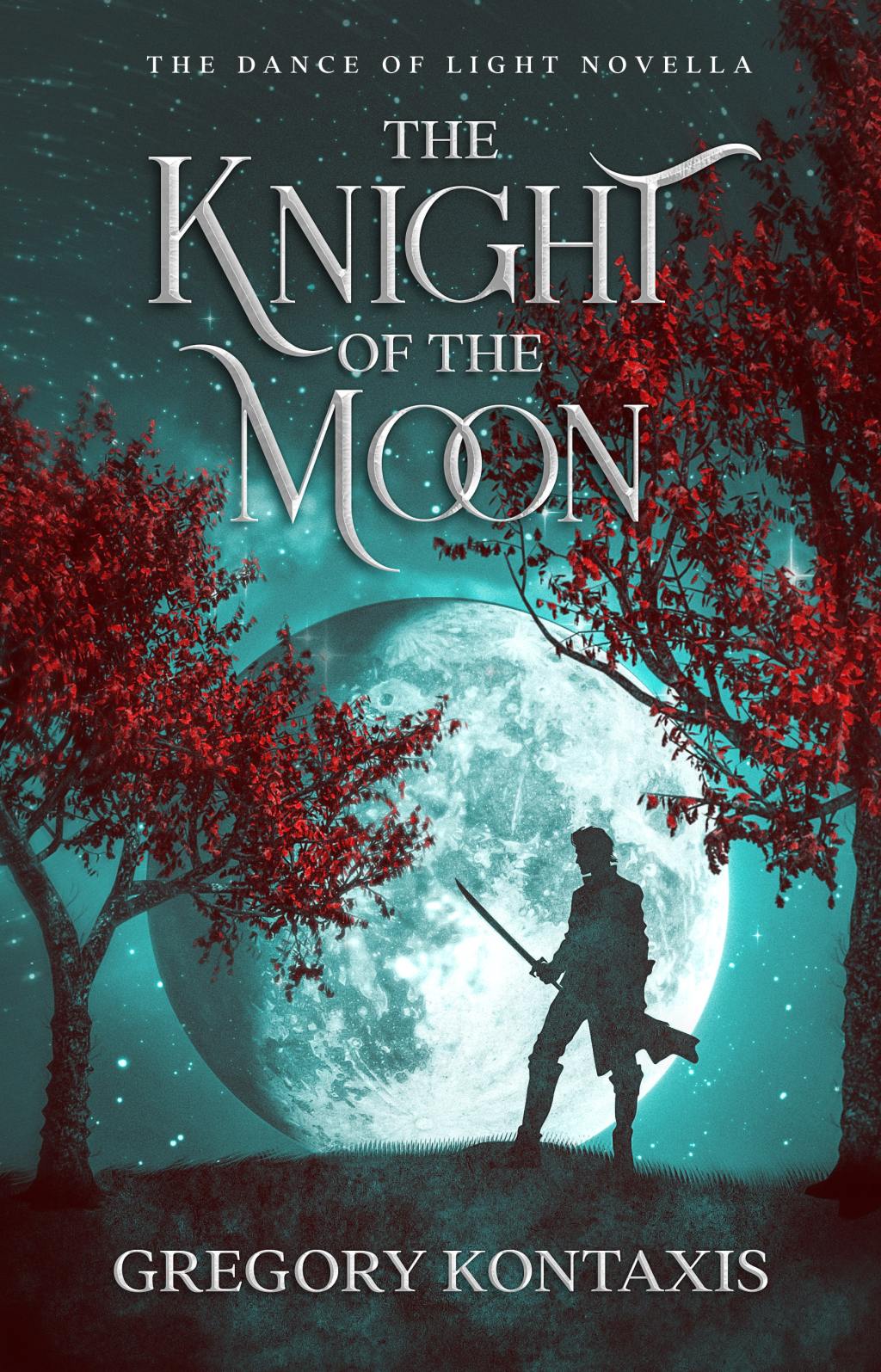
The Knight of the Moon by Gregory Kontaxis is an epic grimdark fantasy novella where, in a turbulent political climate, a bounty hunter, John, and a scorned warrior woman, Nemesis, team up under threat of death to hunt down a fugitive knight. The two of them fall into romance as they search for the Knight of the Moon, who, rumours say, ran from his oath for love and the hope of a peaceful life.
The novella, as a part of the author’s series, The Dance of Light, provides the dark backstory for John the Long Arm, a famous mercenary. He is introduced as a callous, profit-seeking person, denying his deeper emotional needs in fear of getting hurt and cheated. To me, the main point of the story was his evolution from this detached, uncaring person to someone more open to honesty and vulnerability, and looking for more than momentary satisfaction, while also continuing to have to face the darkness and cruelty of the world he lives in. Supporting him in his transformation is Nemesis, a woman who managed to defy the expectations and obstacles imposed on her gender in a patriarchal society and became a skilled soldier. Another important character is the Knight of the Moon himself, Gareth, a warrior who ran as the tides turned on his liege, choosing his own happiness and a forbidden love above loyalty. It is also obvious that there is a well thought-out, larger world around the limited scale of the novella, a fractured land with its political games and dangers which made the setting more than a simple background. Overall, I thought the writing was clear and focused, without much embellishment but with a good balance between action, description, and dialogue. I did feel that letting more subtext and “showing” shine through the narration instead of spelling emotions and thoughts out would have greatly helped deepen the characterisation and involve me better emotionally, but in its roots, I liked the romantic storyline of John and Nemesis, two people so different but still finding in each other what they were missing. I also enjoyed the fact that the pairing consisted of a physically strong, threatening woman and a man in war with his own emotions, unusual for classic fantasy. Similarly, I found the discussions around loyalty (to one’s homeland or lords) a very interesting direction in a story like this.
At the same time, a couple of choices in the story halted my enjoyment a bit. I think a more detailed examination of John and Nemesis’ inner worlds and their interplay as their relationship evolved would have helped to underline the main transformation in John. Nemesis almost immediately appreciates John, because she feels he is different and a decent man, but there was little I could see in John’s acts from this—to me, he acted like other men around him, except the antagonists who were obviously pictured abhorrent. John’s change of heart to let himself be vulnerable and open to love and personal improvement was also jarring and sudden as one moment he was still convinced he wasn’t worthy of someone like Nemesis, then he suddenly accepted that things can change for him. I was similarly waiting for a deeper examination of Nemesis’ motivations which could have helped the discussions around loyalty as well. Characters talk about giving up their loyalty and hope to their homeland, and we get the explanation that the people of this land are rotten, which felt like an oversimplification and in sharp contrast with how Nemesis was looking at her (self-imposed) responsibilities to fight for her home. Especially considering the harder path she had to walk to get to a similar point as the Knight of the Moon, this seemed like a missed opportunity to have a deeper look on the characters’ relationship with their land, their rulers, and their own moral codes.
It also seemed like the novella aimed at a feminist look on the position of women in a classic, patriarchal fantasy setting, where they can be whores or wives and nothing else, and even so they’d always be more vulnerable to violence than the men around them. This was a commendable goal; sentiments like this repeated in the text with the allusion that this is something to change or rise above, and Nemesis was a clear example of a strong woman, able to make her way in the world with something other than her aesthetic characteristics. However I felt like her character and what the novella wanted to express through her relationship with John were (probably unintentionally) undermined in several places. Nemesis’ prowess and personality were still often set in contrast with other, implied “lesser” women (usually prostitutes), often in John’s inner narration, even though we were told he “respects women”. The recurring threats of sexual violence for most of the female characters in the novella made me uncomfortable—assault/harm is of course allowed to be mentioned and depicted, but here, I found it not much more than a handy tool to paint the world grim and dark. And of course there was the end of the story which I will not spoil here, but although I understand the reason for it considering (what I think the intention was with the) the evolution of John’s character arc and the type of world the novella wanted to depict, those events collided with the themes involving women and their representation in the story in a very unfortunate way and made a lot of the things that could have been unique merely a subservient factor to John’s evolution.
All in all, while I did get stuck on some of these themes and their representation in the novella, I think (and hope) the intentions of the author were good. If the characters and the world piqued your interest, the novella certainly seems like a good stepping point into the longer book series with a good focus on a storyline that is perfect for its length and deals with interesting opposites and contrasts.
 Helyna L. Clove
Leave a comment