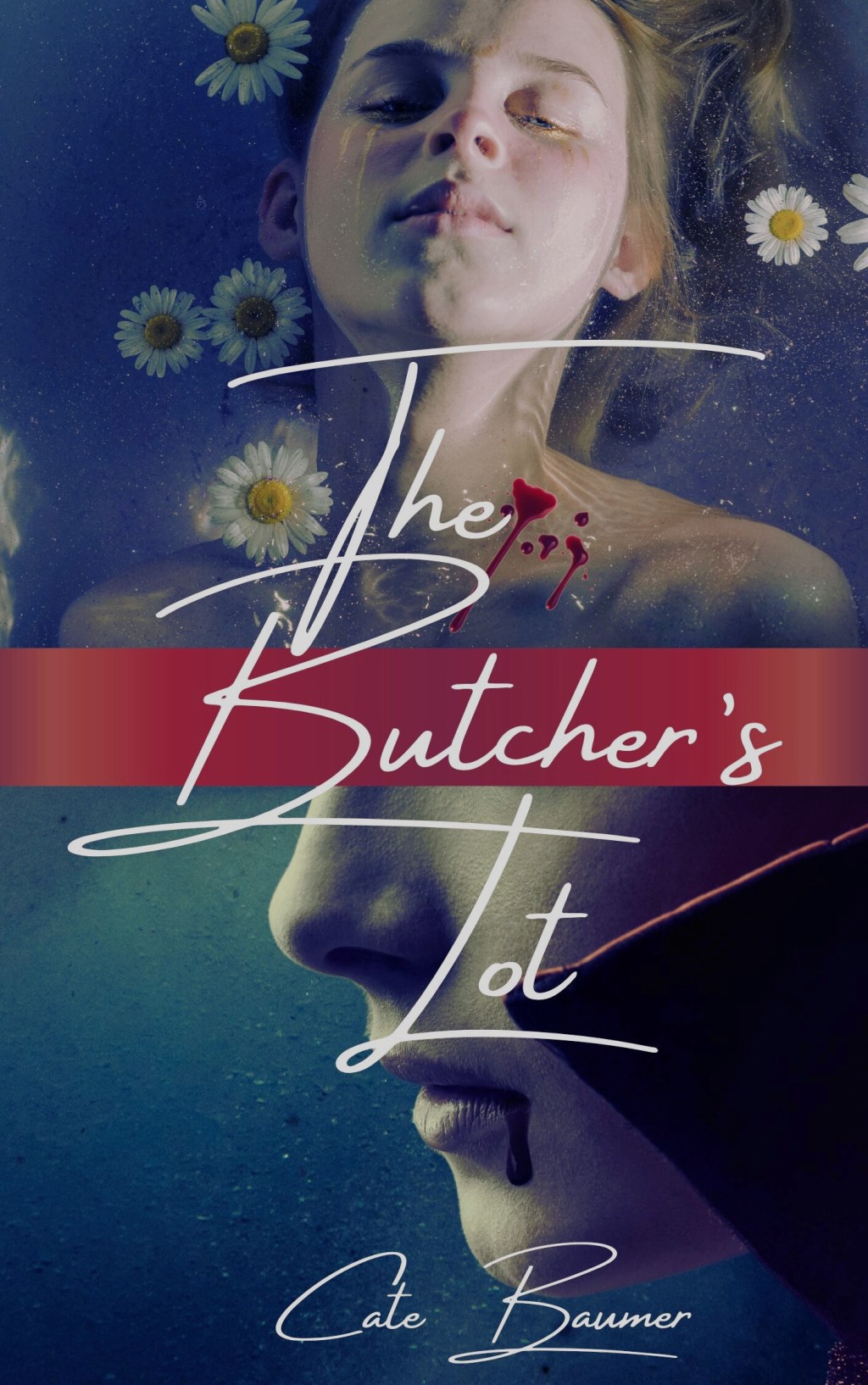
I read this novella for the indie novella competition, SFINCS. The following review is my own personal opinion as a judge and does not reflect the views of the team as a whole. Find out more about the competition here and my team, The WIPs, here!
The Butcher’s Lot by Cate Baumer is a bleak but gentle sapphic romantic fantasy that pulls the strings tighter between two outcasts in a slow, melancholic tale of sins versus penances, and quiet and not-so-quiet ways of fighting for freedom.
Marguerite lives a life of toil and hopelessness in her small island town, housing with her brother and his children. She is an outcast, abhorred for a sin that was not hers, fated to slowly, quietly perish, seen and loved by no one. But one day, a visitor arrives: she is The Butcher, a vampire commander captured and condemned for a sentence of hundreds of years so she is punished for the lives that she’s taken. Her task is to work beside the people of the country, town by town, and then be judged, whether she can continue to live her life of atonement or be finally burned on a pyre. Marguerite is the only one who accepts her offering of labor on the island, and the two of them spend nights fishing in the dragon-infested waters around the island. But The Butcher is looking for something, and in hopes that she would give her the freedom that she never had (i.e. turn her into a vampire and take her away) Marguerite agrees to help her, whatever it takes, and wherever it leads.
The novella is a slow, sensitive exploration of these two characters who are, at first glance, very different from each other but are still connected by their hidden wishes to be free, to have more. The Butcher is a monster and a killer, undoubtedly evil—but how much of a monster is she, really? Would feeling bad about them make her acts better? Or if there was some kind of plan behind the destruction she caused? There was a war back then—how much of it was conquest, how much of it was defence? She is a creature who needs blood to survive—is it necessity or atrocity then? She feels love, and hope, and she yearns like human beings—is she a worse monster than some regular people who commit their small (and large) cruelties day by day, with the collective approval of others around them? How much repentance is enough, is there even such a thing? All these questions flashed through my mind as I watched the two women cautiously but irrevocably getting closer and closer to each other, Marguerite risking more and more to help The Butcher, to help herself, to grasp for something that might not ever be again in her reach.
The freedom Marguerite wants is dangerous and sparkles in all the shades of gray, but as we get to know her background, we can understand why she wants it. She is also called a monster by certain people. A whore. A pathetic creature. As opposed to The Butcher, it was nothing she’s ever done, it was something done to her, but she is the one who will suffer its lifelong consequences. Through her story, Baumer tells about the well-known prejudices and expectations imposed on a woman’s life in a society that deems her fit to not much more than work and bearing children. Life on the island is harsh for everyone, but it’s even harsher for women, without the possibility of choice or freedom in the smallest things. Marguerite wouldn’t want that “normal” life of oppression either (which we see depicted by the new wife of her brother, whose character was such an interesting addition and contrast), but her share is even worse. Are we so surprised that she would then choose something violent and dangerous to break out of it? At the same time, the two of them also connect on a human level (strange as it is), their relationship the first little bud of something more whole and honest.
The novella is short, but there is a lot of depth to it. Watching these two characters interact, getting to know some of the vampire lore, hoping for a better end for both of them immersed me entirely, and the poetic, lovely writing style which is still hard-hitting in places was perfect to tell this story. The ending is satisfying, and it was all in all a very well-rounded, memorable, and thought-provoking tale. I recommend it to everyone who loves dark, emotional, melancholy romances. And vampires! And dragons.

 Helyna L. Clove
Leave a comment